Copyrights and licensing for clothing lines

IMPORTANT PREFACE: I am not a lawyer, do not claim to be one, nor do I play one on tv. The following article and any advice contained therein is based on my own experience and opinions. Any action you take as a result of this is done so at your own risk. Don’t say I didn’t warn you

I know what you’re thinking…you have an awesome idea for a shirt, but it’s using a well known, copyrighted character.

Hmm,” you say, “I could probably get away with it, right? I mean, it’s not like [insert major corporation here] own every aspect of the character. Besides, what I’m really doing is a parody and hardly looks like it…yeah, it’ll be ok…right?”

Sound familiar?

I get lots of questions from people who want to get into the shirt business asking me about using licensed imagery, sayings, and characters in their designs. They ask me if it’s “ok” because they deviated from the original works by a certain percentage, or because it’s a parody, or some other excuse they claim will allow them to cash in on their design while not getting into trouble. The fact is: If it looks like a duck, walks like a duck, and even quacks like a duck…it’s copyright infringement. That means that the little “personal flair” you add to the design idea isn’t enough to keep you off the radar of any major company protecting their intellectual property rights. Make any excuse you want, but you know what? You’ll have to prove it in court…and do you have enough money to do that? That’s what I thought…

For those of you who don’t know, I run a t-shirt company called Fright-Rags which sells shirts based on horror movies. I started out much the same as any shirt company…I came up with some cool designs and started selling them online. As time went on, more were sold, and things picked up quite a bit. Now, I’m happy to say that I do this for a living…but it didn’t come that easily. It took years to build up my business, and lots of trial and error. LOTS of trial and error. I was naive at the beginning and even though I researched as much as I could about copyrights and infringement, I decided to rationalize my personal opinions on the matter and create my designs based on popular horror characters anyway. After all, my designs were different and, therefore, ok…right? Well, that was my first mistake…

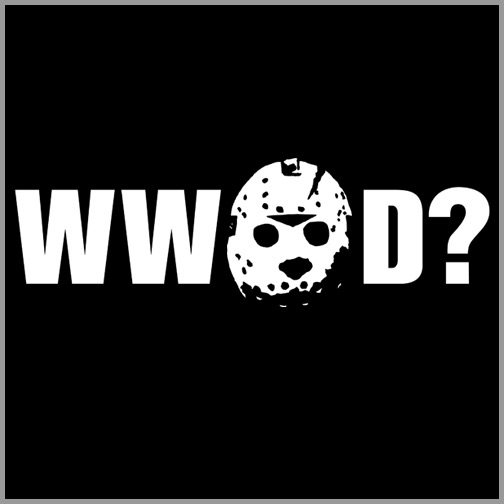
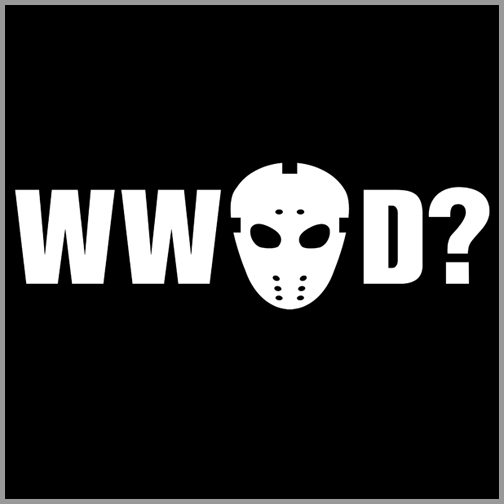
On a cold December day in 2005, I arrived home from work, checked my inbox, and found an interesting letter. No, it wasn’t from a fan thanking me for the kick ass shirts, or another store that wanted to carry my line. It was from New Line Cinemas…and they wanted me to stop production of several designs I created that they claimed to have been infringing on their copyrights. Failure to do so would mean hauling me into court and suing me for copyright infringement. I will be blunt and honest here…I just about crapped myself. I had heard of this happening before, and even knew a few people that received the same letter…but it’s nothing like getting it yourself. I immediately responded by taking the designs off the site and writing a letter of compliance back to them so that they knew I had taken action. The last thing I needed was to be sued. Luckily, they accepted my compliance and the case was closed. Yes, I got away relatively unscathed…but I wouldn’t always be that lucky…
prod wwjd original 300x300 Copyrights and licensing for clothing lines prod wwjd 300x300 Copyrights and licensing for clothing lines

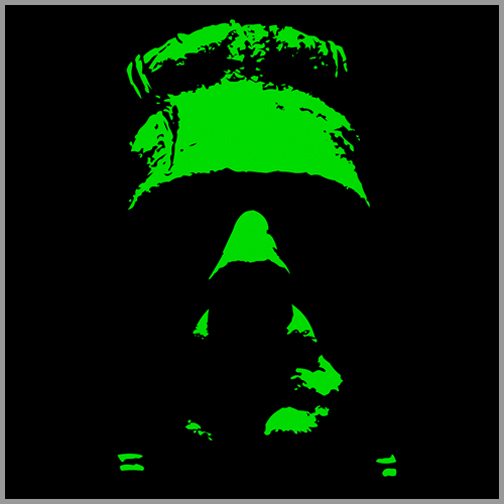
prod monster Copyrights and licensing for clothing linesAbout 8 months ago, I received a similar letter…this time it was from Universal Studios. One of my older, retired designs had been spotted at a small shop in Hollywood by someone working for Universal. When confronted about the design, the store was required to give up their source or risk being shut down. And of course, the paper trail led back to me. The design in question was a silhouetted image of the Frankenstein monster…one that I designed years ago and had since taken it off my site. While I thought I had created an original look for this design (omitting any trademarked features), they felt it referenced their version too closely, and they wanted me to pay them for “back licensing” for the prior two years. Just stopping production was not enough…they wanted money. And lots of it. I won’t disclose the actual figure, but let’s just say it was in the five figure range. In the end, I was able to talk them down to a more reasonable (but still substantial) amount and we settled the case out of court. I was not so lucky that time….it cost alot of money and was a major headache.

Those are just two of my personal experiences with copyright infringement. There are more, but I felt these illustrated the best and worst case scenarios… So what if you want the licensing to a certain image, character, or property? Well, that’s a different story…

Depending on what you are trying to license, prepare to do alot of homework trying to track down who owns the rights to what you want to use. Let’s say you want to license a well known character from a popular movie. First, you’ll have to find out who owns the rights to this character. It could be the film company itself, or perhaps a company that licensed its use for films. If it’s a specific movie, IMDB can point you in the right direction of who owns the rights, or at least the company responsible for making the film. (Speaking of IMDB, I recommend a Pro account to get access to even more information and contacts). However, if the film is older and more obscure, the company that originally owned the rights may no longer exist, and most likely it has been bought by one of the few main film studios that exist today. I find that looking those older companies up on sites like Wikipedia generally help in finding out where the original company’s library of titles currently resides.

If you’re looking to license other types of properties such as characters or products, check out Licensing.org. There you can find information on new properties to be licensed, as well as whatdeals have just been made in the licensing industry. There is even a magazine and online newsletter you can subscribe to that will help keep you up-to-date with all the latest industry buzz. Perhaps the best page on that site is the one that lists all of the licensing agents that are registered with Licensing.org. Each one of these companies manages various properties, and are the ones you’ll want to contact if you want to license any of the properties they manage. A direct link to the licensing agents that are registered with them can be found here: http://www.licensing.org/database/agents/

It is common for a company to use a licensing agency to manage their intellectual property. Licensing agencies act as a liaison between the licensor and the licensee, and are the ones that generally negotiate the contracts to ensure the licensor is getting the best possible exposure. They will be your main contact throughout the term of the license and the ones you’ll have to convince to actually get the licensein the first place.

No matter what you’re trying to license, you’ll most likely have to submit a proposal for review. A proposal generally consists of your reasons for licensing this property, what products you intend to create with the license, and how you will market them. Agents usually also want trade references of places you have done business with and even bank references to make sure your company is financially stable. While the exact type of information they desire may vary, all companies want to know one thing: how much money do you intend to make? No company or licensing agent is going to grant you a license without some sort of guarantee. Think of it from their perspective…they have a viable property worth a certain amount of money. It’s in their best interest to license only to companies that can get their products seen by as many people as possible…and bought by as many people as possible. So, one of the things you must submit in your proposal is a guaranteed amount of money that they will make during the course of the license. Plus, they will want a portion of this money upfront, as well asroyalties on any money made over and above the guaranteed amount. Please keep in mind that each situation varies depending on the property your licensing and the agency you’re dealing with. However, in my experience, this best illustrates what you can expect when you embark on obtaining legal use of an intellectual property.

Thread's not Dead: The Designer’s Guide to the Apparel Industry. Start your own clothing company and become the next Mark Ecko, Obey, or Johnny Cupcakes! Learn how to dominate the graphic tee business and become the next legendary t-shirt designer. Live the dream! This is the most extensive book written about the subject and is a must have for any clothing entrepreneur trying to make it big.


Shopify is perfect for beginners and experts alike. You don't need to have any technical or design experience to easily create a beautiful online store. Simply choose a stylish ecommerce website design, easily customize your online store, add products, and you're pretty much ready to accept payments.


Related Posts

Connect with us

Email Newsletter

Like this post? Sign up to receive email updates and get the latest posts from How to start a clothing company.

  • http://blog.ruderetro.com/ Rude Retro

    Interesting post. I was just talking about this issue today as TeeFury’s tee today is the Big Lebowski. Not only is it infringing on the movie’s copyright but it is also using the faces of Jeff Bridges, Steve Buscemi and Jon Goodman.

  • Pingback: TeeFury Pop Culture T-Shirts (House and the Big Lebowski) | The T-Shirt Review

  • Aleem

    Good stuff.. How ’bout if I want to use a popular person’s face such as soccer players, athletes or even politicians?

  • Theory-A

    Thanks for posting this expiriences of yours they really did help me…so thx again!

  • Alex

    Heyy, is it okay if i buy fruit of the loom shirt and print my designs on them and sell them, if not, where can i buy blank shirts, and/or put my own neck print thing on it

  • Double Wide

    Just curious. Someone may be able to answer this question. Since this licensing and copywright infringement thing is such a big deal; should every design that you make be ran by a lawyer or a licensing agent just to make sure that your butt is covered?

  • http://www.jonathankruse.com Jon Kruse

    I think running your shirt ideas by a lawyer every time is a little extreme. Basically there is fair use that protects artists but if you’re being attacked by a large company you really don’t have the money to fight them.

  • Dubble Wide

    Is there a license or any sort of literature to be reviewed and signed to be covered by Fair Use? Also, has anyone ever been attacked for the use of small graphics? I have one shirt in particular in which I used several very small graphics because it took a lot less time than having to create each graphic myself.

  • Jay

    Great info!
    Can designs be copyrighted by the company making them? For example, the athletic shirts that Nike makes. If I copy a design (no pictures, logos, etc – just the pattern/color), can I get into trouble for that?

  • http://www.jonathankruse.com Jon Kruse

    Of course you can Jay. You are copying someone else’s work. If your doing it with a huge company like Nike they would be sure to sue you if they saw your design.

  • http://www.getfamousproductions.com Alison

    just an fyi, that licensing link doesnt work.

    i see you have lots of film related designs on fright rags, so i’m just curious, how much does it cost you to be allowed to reference those films?

  • http://www.fright-rags.com Ben

    @ Alison – Sorry about the link. They must have just updated their site. Here’s the new one: http://www.licensing.org/database/index.php?tab=companies

    Anyway, the cost varies greatly on the property. It usually works the same though, in that you propose a guaranteed amount that they will make throughout the term of the license and you pay most of that upfront. After that you pay out the rest of the guarantee can be paid out based on sales and if you go over what was guaranteed, then you pay royalties. In some cases it can get quite pricey, but smaller films are usually more attainable.

  • http://www.soulmighty.com Tori

    So what is classed as parody? I have a few designs using a well known character from a well know movie trilogy but i’ve done it in my opinion in a jokey/making fun way….am i gonna get sued? :-/

  • http://www.fright-rags.com Ben

    Honestly, that’s for a judge to decide. The basis is usually things like: does your product confuse the marketplace (i.e. will people mistake your products for licensed versions?), are you making money from it, etc.

    Basically, if a company feels they are being ripped off, they will come after you PLAIN AND SIMPLE. You mostly likely couldn’t afford to even get to the point to defend your stance in front of a judge…unless you have lots of money to spend on lawyers.

    It looks like you’re spoofing the Star Wars trilogy…be careful..they’re notorious for shutting down people.

  • stackpot

    Let’s switch it around. Your design is copied by someone else. Any tips on protecting YOUR IR’s

  • Ronnie

    Hi Ben,

    I have a question what about when Johnny Cupcakes does like the air cupcakes shirts or any pop culture shirts that are really similar to the original does he have to get a license for that? It seems like every t-shirt company are poking fun of pop culture and use something similar to the original.

  • http://fright-rags.com Ben

    Ronnie – Honestly, I don’t know. My guess is no because it’s a parody…he took something popular and put a his own spin on it. However, that doesn’t necessarily mean it’s ok. He could have just gotten away with it. On the other hand, he may have gotten permission.

  • Mo

    One question I have is about copyrights and licenses of general themes and ideas of t-shirts. For example, Johnny Cupcakes makes t-shirts with cupcakes as a theme. Does this mean that no one else can design even a single shirt with a cupcake on it even if the image used is completely original?

  • Leaner

    How do you get your unique designs licensed so no one can use it without your permission?

  • Dwaynne

    What about font’s is it wrong if I use someones font and just style it a bit ?

  • http://www.facebook.com/people/Biaka-Zaidarhzauva/111800937 Biaka Zaidarhzauva

    What are the effects of doing this over-seas, ie. Taiwan? Considering the Asian market is drenched with 'fake' brands, but even local t-shirt brands are now using Mickey Mouse, transformers and such on their shirts.

  • jonkruse

    If your just selling shirts overseas in a place like Taiwon it is hard for the copyright owners to even know what your doing it. There are a lot of places where the local governments don't care about copyright laws and there is a lot of bootlegging going on. It's hard for copyright owners to enforce copyright law in these places.

  • jonkruse

    Of course people can use cupcakes in their shirts. You just can't copy his designs and call them your own.

  • jonkruse

    I have seen this happen a lot and the best response I have seen to get action is having a community of support on your hands. Talk to them and see if they will take down their design then if they don't tell everyone to email them and contact blogs or any people they work with and let them know.

  • joshx

    Hi im in Mexico near the border and im tring to start a clothing company , planing on implementing in Mexico and USA with ecommerce does that mean i have to pay rights in the 2 countries?

  • ross1776

    What most people do not realize is that a great many times, though, most of those lawyers make those threats in order to intimidate if the work that is being used is not copyright protected at all, due to its age. The Constitution provides protection from copyright infringement “for a limited time.” And with many of those older characters or designs, those movie companies merely assumed those artists works due to buyouts, and don't own them either or never did since the original owners were never paid for those designs or their familes.

    So don't just IMMEDIATELY cave when you get one of those letters. But check to see how old that design is, and what the copyright laws were at the time the work was created.

  • marcusd

    I see a lot of shirts with Obama's face and Bush when he was in office. Can a celebrity or public figure copyright their face? I can't see how you could print a shirt with Britney Spears image on it without getting in trouble.

  • http://pulse.yahoo.com/_KSKVIKJZKYB4DTUCR3WSZIH4EU legion

    I was Wondering.if u use a copyrighted image on a t-shirt and sell it but dont call it your design but reference it to its copyright.are u still infringing it?

  • jonkruse

    Yes. I'm not exactly sure what your trying to say but you are using someones copyrighted image. I am not saying you are going to get sued because that person still needs to see your shirt and contact a lawyer and if your only a small site chances are no one will notice.

  • Velly

    So did this ever get answered I would really love to know. Say if I took Brett Farve and turned him into a caricature that my team designed. Yes it will look like him, but an animated version. So can I get sued for that? Please let me know if you know the answer thanks

  • B3Lorenzo

    I loved the article! I have been wanting to start a clothing line starting off with tees and tanktops as a side project so that my siblings could be a part of it. Initially I wanted to just make enough to be able to start another company. I am so glad that I read this article because I was wasting energy trying to figure out how to copyright with a patent. I have a lot more homework to do before I am ready to launch. Thank you for sharing your experiences and as I am seeking to make my dream a reality any and all information tips, tricks, dos, don'ts, any advise, or knowledge that are able to pass on please don't hesitate to add me to your mailing list. [email protected].

  • jmania

    Really good article, thanks :)

  • http://twitter.com/KarmaTiger D'Arcy Mann

    Copyrights can be for as long as 99 years and can also be renewed. Further, when the ownership of intellectual property changes hands (think Terminator, which started with Carolco and has been sold and resold often) the new owners may, and often do, aggressively go after people using unlicensed images or other IP.

    To add to the mix, often when a company knows they don't have a case but figures their war chest is larger than yours, they'll sue you anyhow just to scare others away from following in your footsteps. A friend of mine was going to start a clothing store called “Indiana Jeans”. Lucasfilm sent him a 400 page document claiming it sounded like “Indiana Jones”, but in reading the document it basically said “we know we don't own just the word Indiana, and we'd probably lose if you could afford to withstand a decade long legal battle… but we can afford to keep it in the courts far longer than you can and we'll make sure you die a broken and broke husk of a man. Do you feel lucky, punk?”

  • Allan Cooper8

    hi some years ago i used my photos of motor cars as t shirt, towl and pillow case designs, had them on display in small country town, the car companys came to town and orded me to stop as they might have been my photos but of their cars and even cars from the early 60's that were privately owned wre out of the question. regareds andy

  • Rmarc

    please please help me with this one as i am in the middle of running this shirt.
    what about using an image of an actor that i definetly dont have permission to use nor will i be asking, on a shirt but i wont be selling it i will be releasing it for free as a promotion shirt to promote my brand. Could they go after you in this case if you arent making any money of the shirt?

  • knitphomaniac

    What makes an image changed by 30%? It’d be interesting to find the group of lawyers that quantify the change… If I’ve an image that’s only 29% different vs something that’s 31% different.

    (This is all sarcasm, btw. This idea that changes based on a percentage on copyrighted or trademarked material is bananas and has no legal precedent.)

  • Antigenart

    That is just plain wrong. A quick look at the copyright office shows this is not the case:

    “How much do I have to change in order to claim copyright in someone else’s work?
    Only the owner of copyright in a work has the right to prepare, or to authorize someone else to create, a new version of that work. Accordingly, you cannot claim copyright to another’s work, no matter how much you change it, unless you have the owner’s consent. See Circular 14, Copyright Registration for Derivative Works.”

    source: http://www.copyright.gov/help/faq/faq-fairuse.html

  • http://www.facebook.com/profile.php?id=807539113 Darrell R Hinkle

    If you don’t have the rights to use that actor’s likeness to promote your brand, then yeah, you could definitely catch trouble for that.

  • http://www.facebook.com/customclayshop Custom Clay-Shop

    @ben , saw your shirt on a charter on NBC’s “30 Rock”